Initial Coin Offerings (ICOs) have played a significant role in blockchain fundraising by enabling startups to raise capital through token sales. While the ICO landscape has evolved over the years, many blockchain projects still rely on ICO platforms to launch tokens, attract investors, and build early communities.
However, building a successful ICO platform requires more than just technical setup. It involves secure smart contracts, user-friendly interfaces, compliance considerations, and efficient token sale mechanisms.
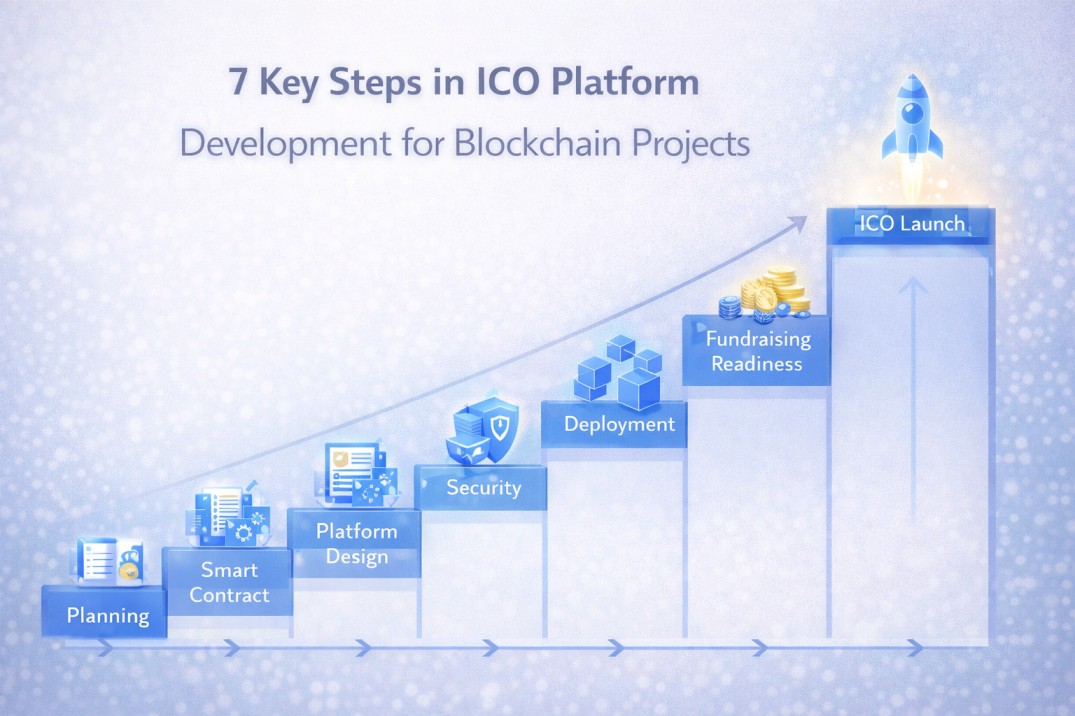
In this guide, we break down the 7 key steps in ICO platform development to help blockchain projects build a secure and scalable fundraising platform.
What Is ICO Platform Development?
ICO platform development refers to the process of building a digital platform that allows blockchain projects to launch and manage token sales.
A typical ICO platform includes:
- token creation and distribution systems
- investor dashboards
- wallet integrations
- smart contract automation
- fundraising management tools
These components work together to create a seamless environment for token sales.
Why ICO Platform Development Matters
A well-developed ICO platform ensures:
- secure transactions
- transparent token distribution
- smooth investor participation
- efficient fundraising processes
Without proper development, projects risk security vulnerabilities, poor user experience, and reduced investor trust.
7 Key Steps in ICO Platform Development
1. Define Project Goals and Tokenomics
The first step in ICO platform development is defining the project’s goals and tokenomics.
This includes:
- token utility and purpose
- total supply and distribution model
- pricing strategy
- fundraising targets
Clear tokenomics help build trust and attract investors.
2. Choose the Right Blockchain Network
Selecting the right blockchain is critical for performance and scalability.
Popular choices include:
- Ethereum (ERC-20 tokens)
- BNB Chain (BEP-20 tokens)
- Polygon
- Solana
Each blockchain offers different advantages in terms of cost, speed, and ecosystem support.
3. Develop Smart Contracts
Smart contracts automate the ICO process by managing token sales and transactions.
Key functions include:
- token creation and distribution
- investor contributions
- automatic fund allocation
Smart contracts must be secure, efficient, and thoroughly tested to prevent vulnerabilities.
4. Design the ICO Platform Interface
User experience plays a major role in ICO success.
The platform should include:
- a professional website
- investor dashboard
- real-time token sale updates
- easy navigation
A user-friendly interface encourages participation and builds credibility.
5. Integrate Wallets and Payment Systems
Investors need secure and simple ways to participate in the token sale.
Common integrations include:
- MetaMask
- WalletConnect
- Trust Wallet
The platform should support multiple cryptocurrencies for contributions, making it accessible to a wider audience.
6. Implement Security and Compliance Measures
Security is one of the most critical aspects of ICO development.
Essential measures include:
- smart contract audits
- data encryption
- secure payment gateways
- anti-fraud systems
Compliance with regulations is also important to ensure legal operation in different regions.
7. Launch and Post-Launch Support
Once the platform is ready, the ICO can be launched.
Post-launch activities include:
- monitoring platform performance
- handling user queries
- fixing technical issues
- updating features
Continuous support ensures smooth operation and long-term success.
Key Features of a Successful ICO Platform
A well-designed ICO platform typically includes:
- secure smart contract integration
- multi-currency support
- investor dashboard
- whitelist and KYC systems
- real-time analytics and reporting
These features enhance usability and build investor confidence.
Common Challenges in ICO Platform Development
Projects may face several challenges, such as:
- security vulnerabilities
- regulatory compliance issues
- scalability concerns
- lack of user trust
Addressing these challenges early improves the chances of success.
Future Trends in ICO Platform Development
The ICO ecosystem continues to evolve with new innovations:
- multi-chain ICO platforms
- integration with DeFi ecosystems
- AI-driven analytics for investors
- enhanced security protocols
- decentralized governance models
These trends are shaping the future of blockchain fundraising.
Conclusion
ICO platform development is a complex process that requires careful planning, strong technical expertise, and a focus on security and user experience.
By following these 7 key steps, blockchain projects can build reliable platforms that support successful token launches and attract investors.
As the blockchain industry continues to grow, well-developed ICO platforms will remain an important tool for decentralized fundraising.