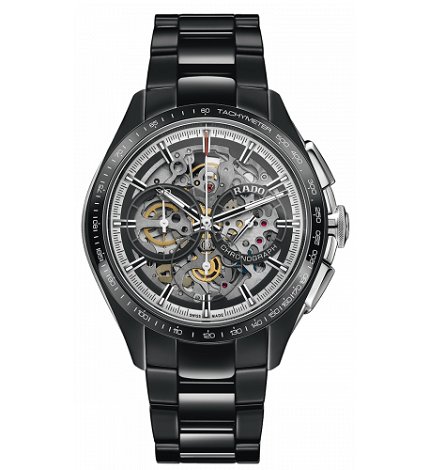
Rado is a Swiss watchmaker based in Lengnau, Switzerland with a staff of 470 personnel. The brand has a massive presence in Southeast Asia and in the Indian subcontinent. But that was not always the case. Rado has been operating in the luxury watches domain for quite some time and it is without a doubt one of the most prolific watch brands. The Rado brand name started to become synonymous with innovation and avant-garde designs since it came out with the DiaStar timepiece. As a matter of fact, Rado was making waves in the watchmaking industry with its innovative techniques even before that.
How It All Began
Things started to unfurl for the popular horologist in 1917 when Brothers Fritz, Ernst and Werner Schlup laid down the foundations for Rado. Of course, at that time it was simply named Schlup & Co. Schlup & Co. focused primarily on its product called the ebauche movement. It was essentially a movement blank that would serve other watch brands during watch assembling.
It took the Schlup brothers some time but they eventually decided to make their own watches. Among these, the Rado and Exacto were the very first ones to appear in the markets. There is not much known about these watches except that they were better than expected. However, it would still be a decade that the watchmaker truly finds its groove with the DiaStar.
The original DiaStar is no longer a member of Rado watches. But to think it, the timepiece paved the way for more game changing watches such as the Rado Centrix and Ceramica.
What Is Tungsten Carbide?
Tungsten carbide, also known as hard metal is a composite that consists of parts of tungsten carbide mixed with a network of cobalt. The material was essentially worked upon in Germany in the 1920s. It was created as there was a need for a dye that could take the damage while drawing out tungsten filaments in halogen bulbs.
Tungsten carbide is made via a pressing process where the powdered form of all the materials involved are pressed together using hydraulics using a ball mill. This entire process is called Powder Metallurgy.
Tungsten carbide is really hard and its hardness is rated at 1600 HV as opposed to steel’s hardness which is rated at 160 HV. Tungsten Carbide is also immune to high temperatures. Steel, for instance, gets soft at around 1000 degrees Celsius. Tungsten carbide, on the other hand, can withstand thrice this temperature.
The Rado V10K
The Rado V10K is a fascinating timepiece. Watch companies have been known to use diamonds on watches but Rado went a step ahead and used diamonds ‘in’ its watches. The V10K used nanocrystalline diamonds using a process called vapour deposition. This resulted in a hardness level of 10,000 Vickers. As far as hardness is concerned, the only substance that matches this score is diamond itself. The watch displayed an ultra-minimalist outlook and was very simplistic in nature.
Today, the Swiss watchmaker has made a different image for itself in the industry. Rado attempts to adhere to a different set of design codes that helps it portray itself in a very different light.