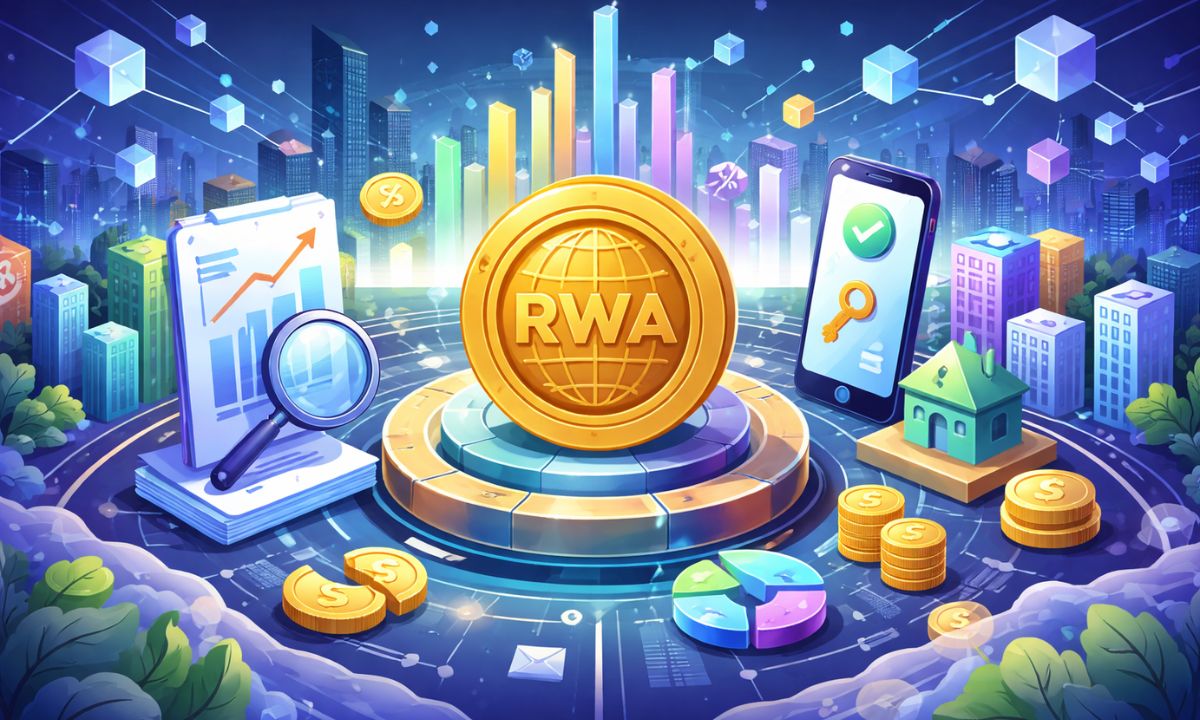
The financial world in 2026 is witnessing a steady shift toward digitizing tangible and intangible assets. From real estate and commodities to private equity and debt instruments, ownership is increasingly being represented through blockchain-based tokens. This movement, widely known as RWA Tokenization, is gaining traction among institutions, startups, and investors seeking new ways to access and manage value.
Unlike early crypto experiments that focused largely on speculative assets, the current wave emphasizes real-world utility. RWA token development is now associated with regulatory alignment, institutional adoption, and practical use cases that extend beyond digital-native ecosystems. As financial markets evolve, Real World Asset Tokenization is becoming a bridge between conventional finance and decentralized systems.
This blog examines the latest trends influencing RWA token development in 2026, offering a detailed view of the forces reshaping this segment.
Institutional Entry and Market Maturity
One of the most notable trends is the increased participation of institutional players. Banks, asset managers, and investment firms are no longer observing from the sidelines. Instead, they are actively collaborating with an RWA Tokenization Company to digitize portfolios and offer token-based investment products.
Institutional interest brings credibility and structured processes. It also introduces compliance requirements that shape how rwa tokenization platform development is approached. These organizations often require audited smart contracts, identity verification layers, and integration with existing financial systems.
As a result, RWA tokenization development services are becoming more refined, focusing on reliability, governance, and interoperability rather than rapid experimentation.
Regulatory Clarity Across Regions
Regulation has long been a challenge in the tokenization space. In 2026, clearer frameworks are emerging across major economies. Governments and regulatory bodies are defining how tokenized assets should be issued, traded, and taxed.
This clarity has encouraged businesses to invest in rwa token development with greater confidence. Real World Asset Tokenization Services now often include compliance modules such as KYC (Know Your Customer) and AML (Anti-Money Laundering) checks.
A rwa tokenization development company today must understand jurisdiction-specific rules, whether operating in the US, Europe, Asia, or the Middle East. This has led to the rise of specialized legal-tech integrations within tokenization platforms.
Expansion Beyond Real Estate
While real estate remains a dominant sector, RWA Tokenization is no longer limited to property assets. In 2026, several new categories are gaining attention:
- Fine art and collectibles
- Renewable energy assets
- Agricultural commodities
- Intellectual property rights
- Infrastructure projects
This diversification reflects growing confidence in token-based ownership models. RWA Tokenization Services now cater to a wider range of industries, each with unique requirements for valuation, custody, and trading.
For instance, tokenizing intellectual property involves royalty distribution mechanisms, while commodities may require real-time pricing feeds. This has led to more sophisticated approaches in rwa tokenization platform development.
Integration with DeFi Ecosystems
Another major trend is the connection between Real World Asset Tokenization and decentralized finance. Tokenized assets are increasingly being used as collateral in lending platforms or included in liquidity pools.
This integration allows asset holders to access liquidity without selling their holdings. At the same time, DeFi users gain exposure to assets that were previously inaccessible.
RWA tokenization development services now often include compatibility with DeFi protocols. This involves designing tokens that meet specific standards and can interact with decentralized applications.
However, this trend also requires careful risk management. Price volatility, collateral valuation, and liquidation mechanisms must be handled with precision.
Focus on Fractional Ownership
Fractional ownership continues to be a defining feature of RWA token development. By dividing high-value assets into smaller units, tokenization allows a broader audience to participate in investment opportunities.
In 2026, platforms are refining how fractions are issued and managed. This includes:
- Dynamic pricing models
- Secondary market trading options
- Automated dividend distribution
A rwa tokenization development company often builds systems that allow investors to buy, sell, or transfer fractions with minimal friction. This approach is particularly appealing in markets where traditional investment barriers are high.
Improved Custody and Asset Verification
Trust remains a critical factor in Real World Asset Tokenization. Investors need assurance that the underlying asset exists and is properly managed.
To address this, 2026 has seen advancements in custody solutions and verification methods. Third-party custodians, IoT devices, and audit mechanisms are being integrated into tokenization platforms.
RWA Tokenizaion development now includes features such as:
- Proof of reserve systems
- Real-time asset monitoring
- Independent audit trails
These additions help bridge the gap between digital tokens and physical assets, making the ecosystem more reliable.
Interoperability Between Blockchains
As the number of blockchain networks grows, interoperability has become increasingly important. Tokenized assets should not be confined to a single ecosystem.
Rwa tokenization platform development in 2026 often focuses on cross-chain compatibility. This allows tokens to move between networks, increasing liquidity and accessibility.
For example, a token issued on one blockchain can be traded or used as collateral on another. This flexibility enhances the usability of tokenized assets and supports broader adoption.
Token Standards and Protocol Evolution
Standardization is another area seeing steady progress. New token standards are being developed to address the specific needs of Real World Asset Tokenization.
These standards define how tokens represent ownership, rights, and obligations. They also include features such as compliance controls and transfer restrictions.
RWA tokenization development services now involve selecting or designing token standards that align with the asset type and regulatory environment. This reduces ambiguity and improves consistency across platforms.
Data Integration and Oracles
Accurate data is essential for managing tokenized assets. In 2026, oracles play a crucial role in connecting blockchain systems with real-world information.
These systems provide data such as:
- Asset valuations
- Market prices
- Interest rates
- Environmental conditions
RWA Tokenization Company solutions often integrate multiple oracle providers to maintain data reliability. This ensures that smart contracts operate based on accurate and timely information.
Secondary Market Growth
Liquidity has always been a concern in traditional asset markets. Tokenization addresses this by creating opportunities for secondary trading.
In 2026, more platforms are offering marketplaces where tokenized assets can be bought and sold. These markets operate with varying levels of decentralization, depending on regulatory requirements.
Real World Asset Tokenization Services now include marketplace development as a standard feature. This allows asset issuers to provide exit options for investors, increasing overall participation.
ESG and Sustainable Investments
Environmental, social, and governance considerations are influencing investment decisions. Tokenization is being used to support projects that align with these values.
For example, renewable energy installations can be tokenized, allowing investors to fund and benefit from clean energy projects. Similarly, social impact initiatives can use tokens to track funding and outcomes.
RWA token development in this area often includes reporting tools that provide insights into environmental and social metrics. This aligns with the growing demand for responsible investment options.
Automation Through Smart Contracts
Smart contracts continue to play a central role in RWA Tokenization. In 2026, their use is becoming more sophisticated, covering a wider range of functions.
These include:
- Revenue distribution
- Compliance enforcement
- Voting mechanisms
- Asset lifecycle management
RWA tokenization development services now focus on writing secure and efficient smart contracts that handle complex scenarios. This reduces manual intervention and improves operational efficiency.
Retail Participation and User Experience
As tokenization platforms mature, there is a stronger emphasis on user experience. Retail investors are becoming a significant part of the ecosystem.
To attract and retain users, platforms are simplifying interfaces and onboarding processes. This includes mobile-friendly applications, intuitive dashboards, and educational resources.
A rwa tokenization development company often prioritizes usability alongside technical features. This helps expand the reach of tokenized investments beyond institutional circles.
Hybrid Models Combining CeFi and DeFi
The distinction between centralized finance (CeFi) and decentralized finance is becoming less rigid. Many platforms are adopting hybrid models that combine elements of both.
For instance, a platform may use centralized custody while offering decentralized trading options. This approach balances regulatory compliance with user flexibility.
RWA Tokenization Services are adapting to this trend by offering modular solutions that can be configured based on client needs.
Security Enhancements and Risk Management
Security remains a primary concern in any blockchain-based system. In 2026, there is a stronger focus on identifying and mitigating risks associated with tokenized assets.
This includes:
- Smart contract audits
- Multi-signature wallets
- Insurance mechanisms
- Incident response plans
RWA Tokenizaion development now involves comprehensive testing and monitoring to prevent vulnerabilities. This builds confidence among investors and stakeholders.
Global Collaboration and Ecosystem Growth
The RWA tokenization ecosystem is becoming more interconnected. Partnerships between technology providers, financial institutions, and regulators are increasing.
These collaborations lead to shared standards, improved infrastructure, and broader market access. A rwa tokenization development company often works with multiple stakeholders to deliver complete solutions.
This collective approach supports the long-term growth of Real World Asset Tokenization.
Education and Awareness
As the concept of tokenized assets becomes more mainstream, education is playing a vital role. Investors and businesses need to understand how these systems work and what risks are involved.
RWA Tokenization Services now frequently include educational content, webinars, and documentation. This helps users make informed decisions and reduces entry barriers.
Conclusion
The trends shaping RWA token development in 2026 reflect a shift toward practical applications and structured growth. Institutional involvement, regulatory clarity, and technological improvements are contributing to a more stable environment.
Real World Asset Tokenization is expanding across industries, supported by better tools, standards, and infrastructure. From fractional ownership to cross-chain compatibility, each trend adds a layer of functionality that strengthens the ecosystem.
As adoption continues, businesses working with an RWA Tokenization Company or seeking rwa tokenization development services will need to align with these developments. The focus is no longer on experimentation alone but on building systems that integrate with existing financial frameworks while offering new possibilities for asset ownership and management.