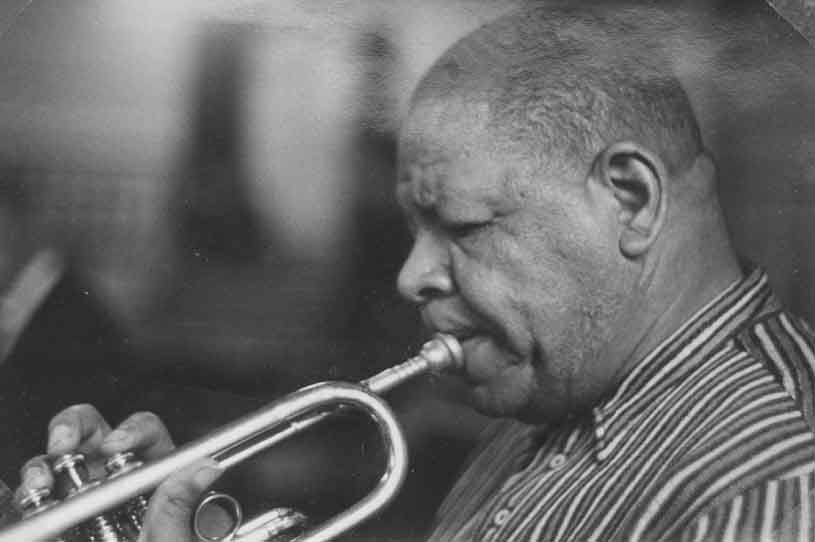
Charlie Parker changed the sound of jazz. Swing had become repetitive.
Much of the creative juices had been expended. There were wonderful soloists coming from the orchestras of Duke Ellington, Count Basie. Among these Coleman Hawkins, Lester Young, Benny Carter. The repertoire was stale. For much of the 1930’s the majority of the songs played were from Broadway or Hollywood. The songs were as good then as they are now. They form the basis of the common repertoire of jazz jam sessions today. You can make sure of it free on itunes.
By 1940 those same songs had been played often and in the ubiquitous swing style. Charlie Parker discovered some of his harmonic ideas while playing a standard. What he did with it is another story. His melodic, rhythmic, and lyrical sense was certainly as revolutionary in the 40’s as Armstrong’s was in the early days of jazz.
Parker developed a fluid style so immediately different, so instantly engaging; a style that so divided the jazz world. Unlike Louis Armstrong of whom only wonderful things were written, Charlie Parker had the entire musical establishment against him, so radical was his approach. He said he admired Benny Carter’s alto saxophone solos. The frenetic energy of Coleman Hawkins was evident as was the sweet coolness of Lester Young. So…was Parker a mere synthesis?
That and ever so much more. He actually began finding notes to play that at first sounded wrong to everyone. Parker found ways to make these notes, thought wrong, sound right; if you could follow him. His harmonic concept of using extensions of the chords as the basis of the improvisation formed the basis of modern jazz.
This caused a lot of musicians to lose their way. What seemed like chaos was in fact the most disciplined tonal system yet devised in American music. The proof of this sweeping statement can be heard. Playing bebop is playing Parker. Generations of musicians have studied Charlie Parker’s solos with the same single-mindedness associated with the study of Mozart.
Did the development of the common bebop language come about because of this fascination with the work of one man? More likely, Charlie Parker inherently played the most logically complete musical language. It seems everyone studied the right musician.
His innovations certainly do not stop at harmony. Linked with these exotic extensions was a unique rhythm sense. Unique then, not now. The new syncopations Parker found were of course a result of the overly melodies he invented. For the time they seemed so angular, so shocking, so surprising. The seemingly jagged rhythms are now considered at once commonplace and exciting. When one listens to any jazz from eras past, a process of unlearning must be attempted. What did they know and when did they know it?
Listening to the Count Basie band swing so effortlessly in 1940 one must imagine a time before Charlie Parker. As crystal-clear as Ellington’s arrangements might be, those musicians had not yet heard Charlie Parker. Their greatness lies in doing what they did. The inability to predict the future should not be held against musicians of the past.
Even a few years ago Charlie Parker’s music had not truly soaked into the fabric of America but now his influence is even heard in elevators, supermarkets, and yet still at the highest levels of creative jazz. It must be noted that many of the great musicians of the past took their disdain for Parker’s revolution with them to the end.
Parker was not totally alone in this work. With him were a few other musicians in their early 20’s who had already played in the swing bands of the late 30’s and who like Parker were searching. Among these was, above all, Dizzy Gillespie [trumpet], Max Roach [drums], Kenny Clark [drums], Thelonious Monk [piano]. The revolution had already started with these men when Parker arrived from Kansas City in 1942 at 22 years of age.
What they all shared was firstly the ability to understand Parker and secondly the capacity to invent new procedures to deal with the new tonal, rhythmic, and harmonic language being developed. Considering the magnitude of the task surprisingly few missteps occur.
There were swing musicians who saw the future and tried to jump on the train. Most of these efforts failed even when accompanied by the pioneers.
Suffice it to say, the recordings made by Charlie Parker, Dizzy Gillespie, Thelonious Monk, Max Roach, Kenny Clarke, Oscar Pettiford [bass], Bud Powell [piano]. changed not only the world of jazz but also the complete spectrum of African-American music and thus the popular music of the world.
Charlie Parker did not have a happy life. He died at 35. The coroner thought he was 55. Few in such a short life have done so much to change music.