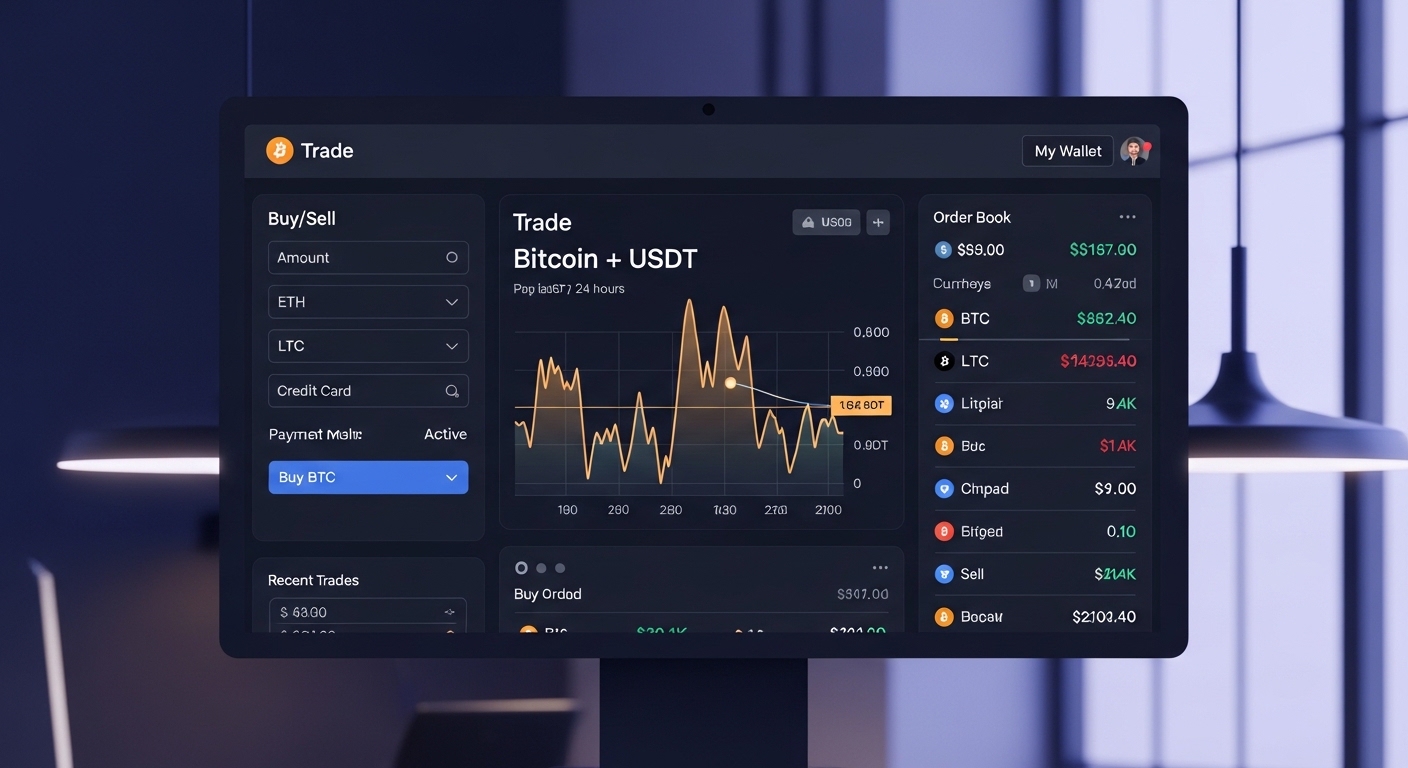
The cryptocurrency exchange industry has rapidly evolved into a major component of the global financial system, processing billions of dollars in daily trading volume across centralized and decentralized platforms. This growth has been fueled by increasing retail participation, rising institutional adoption, and the broader acceptance of digital assets as alternative investment instruments. Platforms like Coinbase have achieved dominance because they successfully address three critical challenges at scale: trust, ease of use, and regulatory compliance. By providing a secure and user-friendly gateway into crypto markets, they have helped bridge the gap between traditional finance and blockchain technology. A centralized cryptocurrency exchange (CEX) functions as a digital marketplace where users can buy, sell, and store assets through a trusted intermediary that manages custody and trade execution. While this model ensures high liquidity and fast transactions, it also introduces responsibilities such as security management, compliance adherence, and system scalability. This article explains how such platforms are built by breaking down their business models, core architecture, and development costs, offering a clear understanding of what it takes to create an exchange like Coinbase.
Business Model And Market Foundation
What Makes A Crypto Exchange Profitable
Crypto exchanges operate on highly scalable revenue models, with the primary income source being transaction fees structured through a maker-taker system. In this model, users who provide liquidity by placing limit orders are charged lower fees, while those who remove liquidity through market orders pay slightly higher rates. Even a small percentage such as 0.1% becomes extremely profitable when applied to large-scale trading volumes, where billions of dollars can be processed daily. Beyond trading fees, exchanges also earn revenue from withdrawal charges, token listing fees, and premium institutional services. Listing fees are especially significant for emerging blockchain projects seeking visibility and liquidity, while institutional offerings such as API access, custody solutions, and algorithmic trading infrastructure generate high-value recurring income. These combined revenue streams make crypto exchanges one of the most scalable business models in the digital economy.
Types Of Cryptocurrency Exchanges You Can Build
When developing a cryptocurrency exchange, the choice of model plays a crucial role in defining its architecture, regulatory requirements, and user experience. Centralized exchanges like Coinbase dominate the market by offering fast execution, deep liquidity, and simple onboarding processes, but they require strong custody systems and strict regulatory compliance. In contrast, decentralized exchanges eliminate intermediaries by using smart contracts to enable peer-to-peer trading, allowing users to maintain full control over their assets; however, they often face limitations in speed, scalability, and usability. Hybrid exchanges attempt to combine the strengths of both systems by integrating centralized order matching with decentralized settlement mechanisms, offering a balanced approach between performance and transparency. Additionally, OTC trading desks serve a specialized function by facilitating large-volume trades for institutional clients outside public order books, helping minimize price impact while ensuring privacy and execution efficiency.
Target Audience Segmentation
A successful crypto exchange is built around a diverse ecosystem of users, each with distinct needs and trading behaviors. Retail traders represent the largest segment and are primarily focused on ease of use, intuitive interfaces, and seamless fiat integration that allows them to enter the crypto market with minimal friction. Professional traders and high-frequency trading firms, on the other hand, require advanced tools such as low-latency execution systems, detailed charting capabilities, and robust API access to support algorithmic strategies. Institutional investors and hedge funds contribute significant trading volume and demand high levels of security, regulatory compliance, insurance-backed custody, and dedicated account management services. Finally, crypto startups and token issuers rely on exchanges for token listings and liquidity access, making them a key driver of ecosystem expansion while also providing exchanges with additional revenue and market relevance.
Core Features Of A Coinbase-Like Platform
User Registration And Identity System
User onboarding is the first and most critical step in building trust within a cryptocurrency exchange ecosystem. A Coinbase-like platform begins with simple email and phone verification flows that reduce friction for new users while ensuring basic identity validation. However, real compliance begins with KYC (Know Your Customer) systems, where users are required to submit government-issued identification and sometimes biometric verification to confirm authenticity. This process is essential for preventing fraud and ensuring regulatory compliance across jurisdictions. Alongside KYC, AML (Anti-Money Laundering) systems continuously monitor transactions for suspicious patterns, flagging or freezing accounts when necessary to comply with financial laws. Exchanges also implement tier-based verification systems, where users unlock higher withdrawal limits and advanced features as they progress through different identity verification stages, balancing usability with regulatory requirements.
Trading Engine And Order Matching System
The trading engine is the heart of any cryptocurrency exchange, responsible for executing millions of buy and sell orders in real time. It relies on advanced order matching algorithms that pair trades efficiently based on price and time priority. Supporting multiple order types such as limit orders, market orders, and stop-loss orders allows users to execute sophisticated trading strategies across different market conditions. Liquidity pool management ensures that sufficient buy and sell orders exist to prevent slippage and maintain stable pricing. High-performance exchanges are engineered for low-latency execution, where even millisecond delays can impact profitability and user experience, making this component one of the most technically complex parts of the system.
Wallet Infrastructure System
A secure wallet infrastructure is essential for safeguarding user funds and maintaining trust in the platform. Exchanges typically operate a dual-wallet system consisting of hot wallets and cold wallets. Hot wallets are connected to the internet and handle daily transactions and withdrawals, while cold wallets store the majority of assets offline to protect against hacking attempts. Supporting multiple cryptocurrencies requires a multi-currency wallet architecture capable of interacting with various blockchain protocols. Private key management is handled through advanced encryption techniques and hardware security modules (HSMs), ensuring that keys are never exposed to unauthorized systems. Every transaction is digitally signed before being broadcast to the blockchain, guaranteeing security and integrity at every stage.
Liquidity And Market Depth Features
Liquidity is a critical factor that determines the success of any exchange, as it directly impacts trading speed and price stability. Order book visualization tools provide users with real-time insights into market depth, showing available buy and sell orders at different price levels. To enhance liquidity, many exchanges aggregate trading volume from external platforms, ensuring tighter spreads and better execution prices. Market makers play a key role by continuously placing buy and sell orders, improving liquidity and reducing volatility. Spread management mechanisms are used to maintain a healthy balance between bid and ask prices, ensuring that users experience minimal price gaps during trading.
Advanced Trading Features
To attract professional traders and increase platform engagement, exchanges offer advanced trading functionalities. Margin trading allows users to borrow funds and amplify their positions, increasing both potential gains and risks. Futures and derivatives trading modules enable speculation on asset price movements without direct ownership, significantly expanding trading opportunities. Staking and yield-earning options allow users to generate passive income by locking their assets into blockchain networks. Additionally, copy trading systems and automated bots enable users to replicate successful trading strategies, making the platform more accessible to beginners while still serving advanced traders.
Admin Panel And Exchange Control System
The admin panel acts as the operational backbone of the exchange, providing full control over system activity and user management. It includes dashboards for monitoring user accounts, tracking transactions, and identifying suspicious behavior in real time. Audit logs ensure transparency and compliance by recording every critical system action. Dispute resolution tools help administrators handle user complaints and transaction issues efficiently. Real-time analytics and reporting systems provide insights into trading volume, liquidity trends, and platform performance, enabling data-driven decision-making for continuous optimization.
Architecture And System Design
High-Level System Architecture
Modern cryptocurrency exchanges are built using microservices architecture, where each core function—such as trading, wallets, authentication, and analytics—operates as an independent service. This modular structure improves scalability and allows teams to deploy updates without affecting the entire system. Event-driven communication, often powered by systems like Kafka, ensures real-time synchronization across services. An API gateway sits at the front, managing requests, routing traffic, and enforcing security policies such as authentication and rate limiting.
Trading Engine Architecture
The trading engine is designed for maximum speed and reliability, using in-memory order books to enable instant order matching. This reduces database dependency and significantly improves execution speed. Matching engine logic follows strict price-time priority rules to ensure fairness in trade execution. To handle massive trading volumes, exchanges use horizontal scaling strategies, splitting markets across multiple engines and distributing load dynamically during peak activity.
Wallet And Blockchain Integration Layer
This layer connects the exchange to external blockchain networks such as Bitcoin, Ethereum, and Solana. It manages blockchain nodes, transaction validation, and asset synchronization. Multi-chain architecture is essential for supporting diverse cryptocurrencies within a single platform. When users withdraw funds, transactions are securely signed, validated, and broadcast to the blockchain network while maintaining full audit records for compliance and security.
Database And Storage Strategy
Exchanges rely on a hybrid database architecture to balance speed and reliability. SQL databases store structured financial data such as user balances and transaction history, while NoSQL systems handle high-speed event logs and real-time trading activity. Redis is widely used for caching order book data, enabling instant updates. Historical trade data is stored in data warehouses for analytics, reporting, and machine learning-based market analysis.
Performance Optimization Techniques
Performance is critical in crypto exchanges, where even milliseconds can affect trading outcomes. Load balancing ensures that traffic is evenly distributed across servers, preventing system overload. Horizontal scaling allows the system to expand dynamically as trading demand increases. Latency reduction techniques such as in-memory computation, optimized network routing, and proximity hosting near major financial hubs help ensure ultra-fast trade execution and maintain a competitive edge in high-frequency trading environments.
Technology Stack For Development
Frontend Technologies
The frontend layer of a cryptocurrency exchange plays a crucial role in shaping user experience, especially in a high-stakes environment where traders rely on real-time data and fast execution. Most modern exchanges use React.js or Next.js to build responsive and dynamic trading dashboards that can efficiently handle live market updates. These frameworks allow seamless rendering of order books, charts, and portfolio data with minimal latency. For mobile accessibility, Flutter and React Native are widely adopted because they enable cross-platform development, ensuring consistent performance across iOS and Android devices. In addition, specialized UI/UX frameworks designed for trading platforms help create visually intuitive dashboards with real-time candlestick charts, depth graphs, and order placement panels that simplify complex trading operations for users.
Backend Technologies
The backend system of a crypto exchange is responsible for processing trades, managing accounts, and ensuring system reliability under high load. High-performance languages such as Node.js, Go, and Java are commonly used due to their scalability and concurrency capabilities. These technologies allow exchanges to handle thousands of transactions per second without performance degradation. Event streaming systems like Kafka or RabbitMQ are essential for managing real-time data flow between services, ensuring that order updates, trade executions, and wallet balances remain synchronized across the platform. Additionally, REST APIs handle standard communication, while WebSocket APIs enable real-time streaming of market data and order book updates, which are critical for active traders.
Blockchain Integration Tools
To support digital asset transactions, exchanges must integrate directly with multiple blockchain networks. Web3 libraries are used to interact with smart contracts, enabling functionalities such as token transfers and decentralized asset verification. Node providers like Infura and Alchemy simplify blockchain connectivity by offering scalable access to Ethereum and other networks without requiring full node infrastructure. For multi-chain support, specialized SDKs are used to integrate assets across different ecosystems such as Bitcoin, Ethereum, and Solana, ensuring users can trade a wide variety of cryptocurrencies within a single platform.
Security And Infrastructure Tools
Security is a foundational requirement for any cryptocurrency exchange due to the high value of assets being handled. Encryption standards such as AES and RSA are widely used to protect sensitive data, including user credentials and transaction details. Cloud infrastructure providers like AWS, Google Cloud, and Azure offer scalable and reliable hosting environments capable of handling global trading traffic. To ensure system portability and scalability, containerization technologies like Docker and Kubernetes are used, allowing exchanges to deploy and manage microservices efficiently across distributed environments.
DevOps And Monitoring Stack
DevOps practices are essential for maintaining uptime and ensuring continuous improvement of exchange systems. CI/CD pipelines enable automated deployment, allowing developers to release updates quickly without disrupting live trading operations. Monitoring tools such as Prometheus and Grafana provide real-time insights into system performance, latency, and server health, helping teams detect and resolve issues before they impact users. Logging frameworks like the ELK stack (Elasticsearch, Logstash, Kibana) are used to centralize and analyze system logs, making it easier to troubleshoot errors, monitor security events, and maintain regulatory compliance.
Security And Risk Management Systems
Cybersecurity Architecture
Security is one of the most critical aspects of a cryptocurrency exchange, as platforms are constant targets for cyberattacks. DDoS protection strategies are implemented to prevent traffic overload attacks that could disrupt trading services. Firewalls and intrusion detection systems continuously monitor network activity to identify and block suspicious behavior in real time. Secure API authentication methods, including multi-factor authentication and token-based access control, ensure that only authorized users and systems can interact with sensitive exchange functions.
Wallet Security Framework
Wallet security is central to protecting user funds and maintaining platform credibility. Most exchanges use cold storage vault systems to store the majority of digital assets offline, significantly reducing exposure to hacking attempts. Hot wallets are used for daily operations but contain only limited funds. Multi-signature authorization adds another layer of security by requiring multiple approvals before transactions can be executed. Hardware security modules (HSMs) are used to securely generate and store cryptographic keys, ensuring that private keys are never exposed to external systems or attackers.
Fraud Detection And Prevention
Modern exchanges rely heavily on advanced fraud detection systems to protect users and maintain market integrity. AI-based anomaly detection systems analyze transaction patterns to identify unusual behavior such as rapid withdrawals or abnormal trading spikes. Suspicious trading behavior tracking helps detect market manipulation tactics like spoofing or wash trading. Additionally, account takeover prevention mechanisms such as device fingerprinting, login anomaly detection, and multi-factor authentication help safeguard user accounts from unauthorized access.
Compliance And Regulatory Security
Regulatory compliance is a major requirement for operating a legitimate cryptocurrency exchange, especially in regions like the United States, European Union, and Asia, where financial laws are strictly enforced. Exchanges must adhere to licensing requirements that vary by jurisdiction, often requiring registration as money service businesses or virtual asset service providers. Reporting tools for regulatory audits are implemented to maintain transparent records of transactions, user activity, and financial flows. These systems ensure that exchanges can respond quickly to legal inquiries and maintain compliance with global financial regulations, which is essential for long-term sustainability and institutional trust.
Development Process And Implementation Roadmap
Planning And Requirement Gathering Phase
The development of a cryptocurrency exchange begins with a comprehensive planning phase that defines the product vision and business objectives. This stage involves in-depth market research to understand current industry trends, user expectations, and regulatory landscapes across different regions. Analyzing competitors such as Coinbase, Binance, and Kraken helps identify gaps in the market and opportunities for differentiation, whether through better user experience, lower fees, or specialized features. Equally important is defining a clear feature prioritization strategy, where essential components like trading functionality, wallet integration, and security systems are identified for the initial launch, while advanced features are planned for later phases. This structured approach ensures efficient resource allocation and reduces the risk of overbuilding during early development.
Design And Prototyping Phase
Once requirements are finalized, the focus shifts to designing the user experience and system architecture. UI/UX design plays a critical role in shaping how users interact with the platform, particularly in trading environments where clarity and speed are essential. Designers create intuitive dashboards that display real-time market data, charts, and trading options in a clean and accessible format. At the same time, system architecture blueprinting defines how different components—such as the trading engine, wallet system, and APIs—will interact within a scalable infrastructure. Prototyping tools are often used to create interactive models of the platform, allowing stakeholders to validate workflows and usability before development begins, reducing costly revisions later.
Development Phase
The development phase is where the exchange takes shape through the implementation of core systems. Backend development focuses on building the trading engine, order matching system, and database infrastructure capable of handling high transaction volumes with minimal latency. Frontend development runs in parallel, creating responsive dashboards and mobile applications that provide seamless user interaction with real-time data. Wallet integration is another critical component, requiring secure connection to blockchain networks and implementation of deposit and withdrawal mechanisms. Throughout this phase, continuous testing is conducted to ensure that all components function cohesively, with particular attention to performance and security.
Testing And Security Audits
Before launch, the platform undergoes rigorous testing to ensure reliability under real-world conditions. Functional testing validates that all features—such as order placement, trade execution, and fund transfers work as intended. Stress testing is conducted to simulate high trading volumes and extreme market conditions, ensuring that the system can handle peak loads without failure. Security penetration testing is especially crucial, as it identifies vulnerabilities that could be exploited by attackers. Independent security audits are often performed to validate the robustness of wallet systems, APIs, and infrastructure, providing an additional layer of assurance before deployment.
Deployment And Launch Strategy
The final stage involves deploying the platform and introducing it to the market through a carefully planned launch strategy. Many exchanges begin with a beta release, allowing a limited group of users to test the platform and provide feedback. This approach helps identify any remaining issues while building early user engagement. A gradual scaling strategy is then implemented, where infrastructure capacity is increased in line with user growth to maintain performance stability. Marketing and user acquisition strategies play a key role at this stage, leveraging digital campaigns, referral programs, and partnerships to attract users. A successful launch not only depends on technical readiness but also on the ability to build trust and credibility in a highly competitive market.
Conclusion
Building a cryptocurrency exchange is a highly complex but strategically rewarding endeavor that sits at the intersection of financial technology, cybersecurity, and large-scale distributed systems engineering. From designing a robust trading engine and secure wallet infrastructure to implementing strict compliance frameworks and scalable cloud architecture, every layer of the platform must be engineered for speed, reliability, and trust. Success in this space depends not only on technical excellence but also on strong business strategy, regulatory alignment, and continuous innovation to meet evolving market demands. As the industry matures, competition is increasingly driven by user experience, liquidity depth, and institutional readiness, making it essential for any new entrant to follow a structured development roadmap. Partnering with a professional crypto exchange development company can significantly reduce time-to-market, ensure compliance readiness, and provide access to proven architectures that enhance scalability and security, ultimately increasing the chances of building a successful and competitive exchange platform.