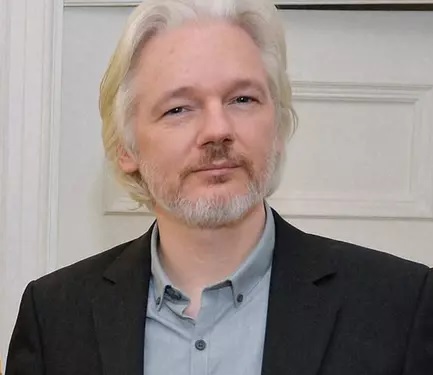
The two-day hearing in the UK High Court for Australian journalist Julian Assange’s last appeal was on February 20 and 21, 2024. Following the hearing, the two judges presiding asked for additional information and additional time. Their decision could come any moment. What hangs in the balance is Assange’s chances to appeal through the UK High Court, or he could be put on a plane headed for the Eastern District of Virginia Federal Court in the United States. If this chance is turned down, there is a possibility of applying to the European Court of Human Rights to ask for an emergency injunction to prevent the UK from extraditing him. But it is up to the ECHR to intervene.
Assange was made an honorary citizen of Rome last month. The term Civis Romanus Sum (I am a Roman citizen) historically constitutes a plea for the legal human rights of a Roman Citizen. In 1850 Lord Palmerston thought that the rights of CIVIS ROMANUS extended to British subjects, which includes citizens of commonwealth countries like Australia. A court in the UK may well have precedent to set Julian Assange free. Lord Palmerston said in his famous speech “Civis Romanus Sum so also a British subject, in whatever land he may be, shall feel confident that the watchful eye and the strong arm of England, will protect him against injustice and wrong.”
Assange has garnered support from major human rights groups and has won dozens of journalism awards. His release is advocated by two UN Special Rapporteurs on Torture and one UN Special Rapporteur on Freedom of Expression. Articles have been written and speeches have been made substantiating that his work as a publisher and journalist falls within free speech protections due to its relevancy to the public’s right to know. There is a healthy support system of dedicated grass-roots activists numbering in the millions worldwide coming from a wide variety of backgrounds such as doctors, law professors, teachers, students, independent journalists and free speech supporters. Support for Assange comes from the political left, right and center. Several members of U.S. Congress wrote a bi-partisan letter last year calling on President Biden and Attorney General Merrick Garland to end Assange’s prosecution. Currently in the works is House Resolution 934 to protect journalism as free speech and release Assange home to his family. Lawmakers and parliamentarians in several countries have grown in number and increased the volume in calling for an end to Assange’s persecution and for him to finally be given his freedom.
The importance of this case is what it means to the future of journalism, free speech and press freedoms. If Julian Assange is extradited to the United States and successfully convicted, then the Espionage Act, that has never been used against a journalist before, could then be used to arrest any journalist in the world whom the US state department deems indictable for publishing classified material, whether it is in the public interest or not. It could also affect whether the First Amendment will protect the Free Speech of the Free Press, or not. The future jobs of journalists may be in jeopardy and many Assange supporters feel their right to know the truth will be at risk.
Stella Assange, wife of Julian, has been leading the heroic battle for her husband’s freedom. She is afraid he would not survive extradition in his fragile health, leaving their two sons fatherless. Doctors and two UN Rapporteurs on Torture agree, leaving their two young sons fatherless. Assange’s brother, Gabriel Shipton, who attended the 2024 State of the Union Address as a guest of Congressman Thomas Massie, expressed the widely-shared concern that Julian Assange, whose health is delicate, will not survive the extradition to the United States. It was admitted by prosecutors at Assange’s hearing that there is no assurance that the Eastern District of Virginia Federal Court would not add the death penalty to the 175 years being held over his head.
###