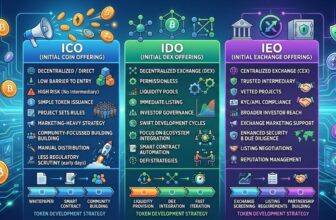
The world of digital assets has opened immense opportunities for startups to create their own tokens, raise capital, and establish a presence in the blockchain ecosystem. However, navigating the complexities of token development can be challenging, especially for early-stage companies with limited budgets. This is where Cost-Effective Token Development comes into play, enabling startups to leverage blockchain technology without overspending. This guide provides a complete overview of how startups can develop tokens efficiently while maintaining quality, security, and scalability.
Why Token Development Matters for Startups
Tokens are digital assets that represent value, utility, or governance rights on a blockchain network. Startups can launch tokens for various purposes, such as raising funds through initial coin offerings (ICOs), rewarding users, or providing access to services on their platforms. Tokens also enable startups to engage with their communities and create an ecosystem where participants have a vested interest in the project’s success.
While the potential benefits are significant, token development can be expensive if approached without a clear strategy. Costs can escalate due to technical complexities, security requirements, legal compliance, and ongoing maintenance. Therefore, startups need a structured approach that ensures they achieve their objectives while keeping costs under control.
Key Components of Cost-Effective Token Development
1. Define Objectives and Token Use Cases
The first step in any token development process is to clearly define the purpose of the token. Whether it is for fundraising, utility, or governance, having a defined use case helps streamline development and avoids unnecessary features that increase costs. A focused approach allows startups to allocate resources efficiently, ensuring that time and budget are directed toward features that provide real value.
2. Choose the Right Blockchain Platform
Selecting the appropriate blockchain platform is critical for both performance and cost-efficiency. Public blockchains like Ethereum offer robust infrastructure and large developer communities but may come with higher transaction fees. Alternatively, startups can consider platforms like Binance Smart Chain, Solana, or Polygon, which provide faster transaction speeds and lower costs. The choice of platform also affects token standards, compatibility, and integration with existing wallets and exchanges.
3. Select the Appropriate Token Standard
Token standards define how tokens operate on a blockchain. Common standards include ERC-20 and ERC-721 on Ethereum, BEP-20 on Binance Smart Chain, and SPL on Solana. Choosing the correct standard impacts development complexity and cost. For instance, fungible tokens with ERC-20 are simpler and cheaper to deploy than non-fungible tokens (NFTs) with ERC-721. Startups should assess their project requirements and select a token standard that aligns with their use case and budget.
4. Develop a Smart Contract Efficiently
Smart contracts are self-executing agreements that define token rules, transactions, and governance mechanisms. Developing a secure and optimized smart contract is crucial for successful token deployment. Startups can reduce costs by leveraging pre-audited, open-source smart contract templates instead of building from scratch. Reusing proven frameworks minimizes the risk of errors and accelerates the development process, saving both time and money.
5. Conduct Smart Contract Audits Strategically
Security is a non-negotiable aspect of token development. Vulnerabilities in smart contracts can lead to hacks, financial losses, and reputational damage. While professional audits are essential, startups can implement cost-effective measures by performing internal code reviews, using automated testing tools, and conducting staged audits. Prioritizing high-risk areas ensures that critical vulnerabilities are addressed without overspending on unnecessary audits.
6. Optimize Gas Fees and Deployment Costs
Transaction fees, or gas fees, are often a significant expense during token deployment, particularly on networks like Ethereum. Startups can optimize costs by deploying contracts during periods of lower network congestion or choosing blockchains with lower fees. Additionally, efficient contract coding can reduce the computational resources required for execution, directly impacting deployment costs.
7. Integrate Wallets and Exchanges Thoughtfully
To make a token functional, it must be accessible via wallets and exchange platforms. Integrating with popular wallets like MetaMask or Trust Wallet ensures user accessibility, while listing on exchanges increases liquidity and adoption. Startups can save costs by initially focusing on a limited number of wallets and exchanges that have the largest reach and relevance to their target audience. Expansion can follow once the token gains traction.
8. Utilize Modular and Scalable Architecture
Designing a modular token architecture allows startups to add features in stages rather than building a fully-featured token from day one. This approach reduces upfront costs and enables startups to respond to market demands or user feedback over time. Scalable architecture also ensures that as the user base grows, the token can handle increased transaction volumes without requiring costly redeployment.
9. Leverage Open-Source Tools and Frameworks
The blockchain ecosystem is rich with open-source tools, frameworks, and libraries that significantly reduce development costs. Platforms like OpenZeppelin offer audited smart contracts, templates, and utility functions that accelerate development while maintaining security standards. By leveraging these resources, startups can avoid reinventing the wheel and focus on customizing features unique to their project.
10. Plan for Compliance and Legal Requirements
Regulatory compliance is a critical factor in token development, especially if the token is intended for fundraising or public trading. Cost-effective token development does not mean ignoring regulations; it involves planning legal compliance strategically. Startups can reduce expenses by consulting legal experts during the planning phase, understanding jurisdiction-specific requirements, and aligning token features accordingly. Proactive compliance planning prevents costly legal challenges later.
Advantages of Cost-Effective Token Development
Implementing a cost-effective approach to token development offers multiple advantages for startups. It ensures that limited resources are used wisely, reduces financial risks, and accelerates time-to-market. Startups can achieve functional, secure, and compliant tokens without incurring unnecessary expenses. Additionally, efficient development practices foster sustainability, enabling ongoing updates, integrations, and feature expansions without excessive cost burdens.
A well-executed token development process also strengthens investor confidence. By demonstrating that the token is built on a secure, reliable, and budget-conscious framework, startups can attract early adopters and potential partners more effectively. Cost-effective strategies often result in higher ROI because funds are allocated to value-adding activities rather than redundant development tasks.
Common Mistakes to Avoid
Startups seeking cost-effective token development should be aware of common pitfalls that can lead to overspending or project delays. One frequent mistake is overcomplicating token features during initial development. Adding unnecessary functionality increases development time, security risks, and maintenance costs. Another error is choosing the wrong blockchain platform without considering scalability, fees, and community support.
Neglecting security audits or relying solely on untested smart contracts can also be costly. A single vulnerability can result in financial loss and reputational damage that outweighs any initial savings. Similarly, failing to plan for regulatory compliance can lead to legal penalties and project shutdowns, negating the benefits of a cost-effective approach.
Steps to Implement Cost-Effective Token Development
Startups can follow a structured roadmap to implement cost-effective token development successfully. First, define clear objectives and token use cases. Second, select the most appropriate blockchain platform and token standard. Third, leverage open-source frameworks and pre-audited smart contracts to accelerate development.
Next, conduct security audits strategically, focusing on critical areas while using automated tools for less risky sections. Optimize gas fees and deployment costs by considering network conditions and contract efficiency. Integrate wallets and exchanges in phases to control costs, and adopt modular, scalable architectures for future expansion. Finally, plan for legal compliance proactively to avoid regulatory risks.
This roadmap allows startups to maintain control over expenses while ensuring that the token meets functional, security, and compliance standards. Following these steps creates a balance between quality and cost-efficiency, which is essential for startups operating under tight budgets.
Future Trends in Token Development for Startups
The token development landscape is continually evolving, and startups must stay informed about emerging trends to remain competitive. Layer-2 solutions, cross-chain interoperability, and decentralized finance (DeFi) integrations are increasingly popular, enabling startups to offer enhanced functionality without significantly increasing costs.
Tokenization platforms are also offering turnkey solutions that simplify deployment, governance, and management of digital assets. These platforms allow startups to benefit from prebuilt infrastructures, reducing the need for extensive in-house development and further lowering costs.
As regulatory frameworks become clearer and blockchain adoption grows, startups will find it easier to launch tokens efficiently and cost-effectively. Combining technological innovation with strategic planning ensures that startups can capitalize on market opportunities while maintaining a budget-conscious approach.
Conclusion
Cost-Effective Token Development is essential for startups seeking to leverage blockchain technology without overextending resources. By carefully planning objectives, selecting the right blockchain and token standards, leveraging open-source tools, optimizing costs, and ensuring security and compliance, startups can create high-quality tokens efficiently.
The key lies in a structured, strategic approach that balances functionality, security, and scalability with cost considerations. Startups that implement these practices not only reduce development expenses but also build investor confidence and set the foundation for long-term success in the blockchain ecosystem. With careful planning and execution, startups can develop tokens that deliver value, engage communities, and position themselves effectively in a competitive digital market.